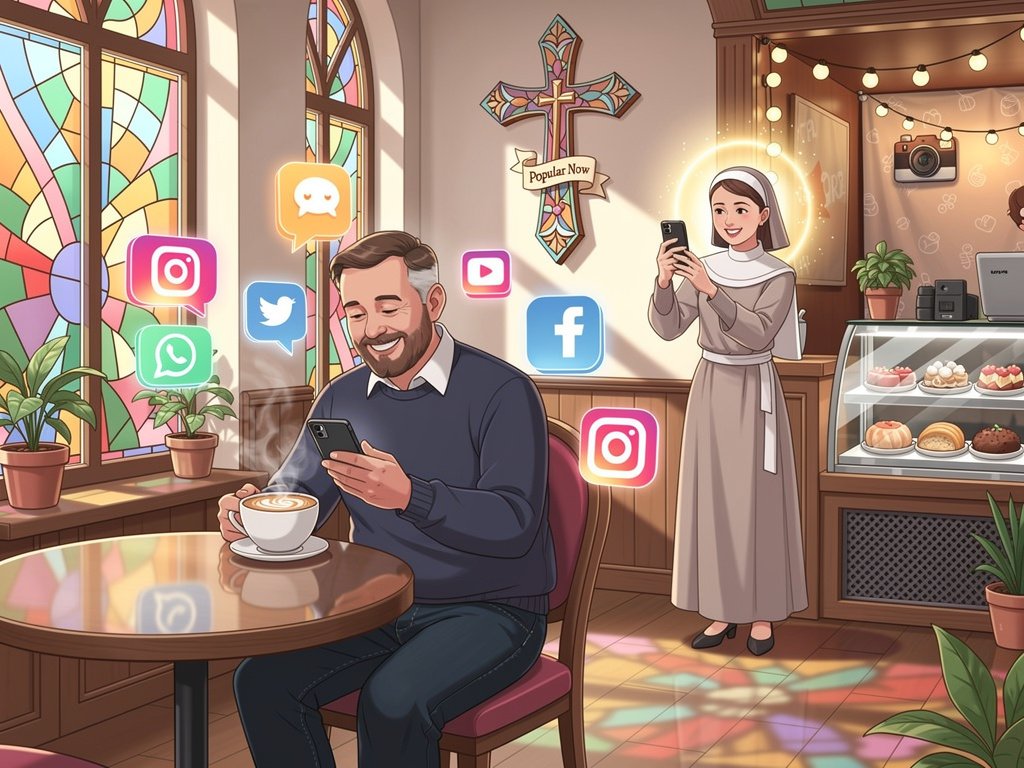
When Jesus Gets a Hashtag and the Nuns Go Viral
Welcome my Lambs.
Ah, mes amis, gather ‘round the digital confessional booth, for today we discuss a miracle even greater than turning water into wine: the transformation of Christianity into a brand.
Yes, you heard it right—2,000 years of tradition, theology, and solemn hymns have met their match in the algorithmic hands of the 21st century. The cross is no longer just a symbol of salvation; it’s a logo, and the Good Book? Well, it’s now a content strategy.
The Hipster Jesuit: Lattes, Liturgies, and Likes
Let’s begin with the Jesuits, those intellectual powerhouses of the Catholic Church. Once known for their rigorous scholarship and missionary zeal, they’ve now embraced a new calling: influencer.
Picture this: a Jesuit priest, clad in a carefully distressed cassock, sipping an artisanal cold brew while live-tweeting a homily on “the radical love of Christ (and why it’s trending).”
His Instagram bio reads: “Theologian | Social Justice Warrior | Occasional Memer.” His posts? A mix of Thomas Aquinas quotes overlaid on sunrise photos and TikTok duets with progressive nuns.
But why stop at social media? The modern Jesuit is also a podcaster, a TEDx speaker, and—if the algorithm smiles upon him—a guest on a late-night show. The message is clear: faith isn’t just for Sundays; it’s a lifestyle brand. And what’s a lifestyle brand without merch?
Enter the online store, where you can buy a “WWJD (What Would Jesus Do?) but make it aesthetic” tote bag or a limited-edition rosary designed by a minimalist Scandinavian artist.
Viral Nuns: Habits, Hashtags, and Holy Humor
If the Jesuits are the hipster priests of the digital age, then the nuns are the breakout stars. Forget the stern, ruler-wielding sisters of old; today’s nuns are content creators.
Sister Mary TikTok, for instance, dances in her habit to viral sounds while lip-syncing Bible verses. Her videos have millions of views, and her comment section is a mix of “Amen!” and “Yaaas, queen, slay!”
Then there’s Sister Social Justice, who uses Instagram Stories to break down papal encyclicals into digestible infographics.
Her highlight reel includes “How to Be an Ally for LGBTQ+ Catholics” and “5 Ways to Practice Radical Hospitality (Without Burning Out).” She’s not just spreading the Gospel; she’s building a community—one like, share, and prayer emoji at a time.
But let’s not forget the meme nuns. These holy women have mastered the art of combining sacred and profane, posting memes like “When you tell your superior you’ll pray for her but you actually just gossiped about her” or “Me waiting for the Rapture vs. me waiting for my Amazon package.”
They’re relatable. They’re funny. And, most importantly, they’re engaging.
The Church of the Algorithm: Where Salvation Meets SEO
Of course, this rebranding isn’t just about fun and games. It’s about survival. In a world where attention spans are shorter than a TikTok video, the Church has realized it must adapt or risk becoming irrelevant.
So, what’s a millennia-old institution to do? Hire a social media manager, of course!
Enter the Church Growth Consultant, a new breed of professional who specializes in turning parishes into engagement hubs. Their job? To optimize the liturgy for shareability. Is the homily too long? Cut it down to 280 characters. Are the hymns not trending? Swap them out for worship songs with a drop. Is the collection plate looking empty? Launch a Patreon for exclusive spiritual content.
And let’s not forget the hashtag campaigns. #BlessedAndHighlyFavored, #CatholicAndWoke, #JesusTakeTheWheelButFirstLetMePostThis—these aren’t just trends; they’re movements.
The Church has learned that in the digital age, faith isn’t just about belief; it’s about belonging. And belonging, as any marketer will tell you, is monetizable.
The Dark Side of the Sacred Rebrand
But—mais bien sûr—there’s a catch. When faith becomes a brand, it risks becoming a product. And products, as we know, are subject to the whims of the market.
What happens when the algorithm decides that spirituality is out and astrology is in? Do we pivot to “Jesus but make it cosmic”? Do we rebrand the Trinity as a wellness trio?
And what of the souls who don’t fit the aesthetic? The poor, the marginalized, the un-photogenic—do they get left behind in the quest for likes?
When the Church becomes a content creator, does it risk losing its prophetic voice in favor of engagement metrics?
The Canard’s Pivot: A Moment of Grace
But let’s not end on a sour note, mes amis. For all its absurdities, this sacred rebrand is also a reminder that faith is alive. It’s not a dusty relic; it’s a living, breathing, meme-ing thing.
And if the Church can learn to laugh at itself, to dance in its habits, to meet people where they are—well, perhaps that’s not such a bad thing.
So, the next time you see a nun going viral or a priest dropping a meme, don’t roll your eyes. Smile. Laugh. And maybe—just maybe—hit share.
Until next time, keep your faith strong, your Wi-Fi stronger, and your memes holy.
This is Le Canard Cosmique, signing off with a prayer and a retweet.
Tags: christianity, social media, satire, religion, rebranding, humor, faith, digital age