Sins, Apps, and the Digital Absolution Industry
Bienvenue, mes amis, to another edition of Le Canard Cosmique, where we sit at the intersection of the sacred and the absurd, sipping espresso and watching the world spin itself into ever-more creative ways to monetize guilt.
This month, we turn our gaze to a phenomenon so delightfully modern it could only have been born in an era where we outsource our grocery shopping, our romantic connections, and now—mon Dieu—our moral inventory.
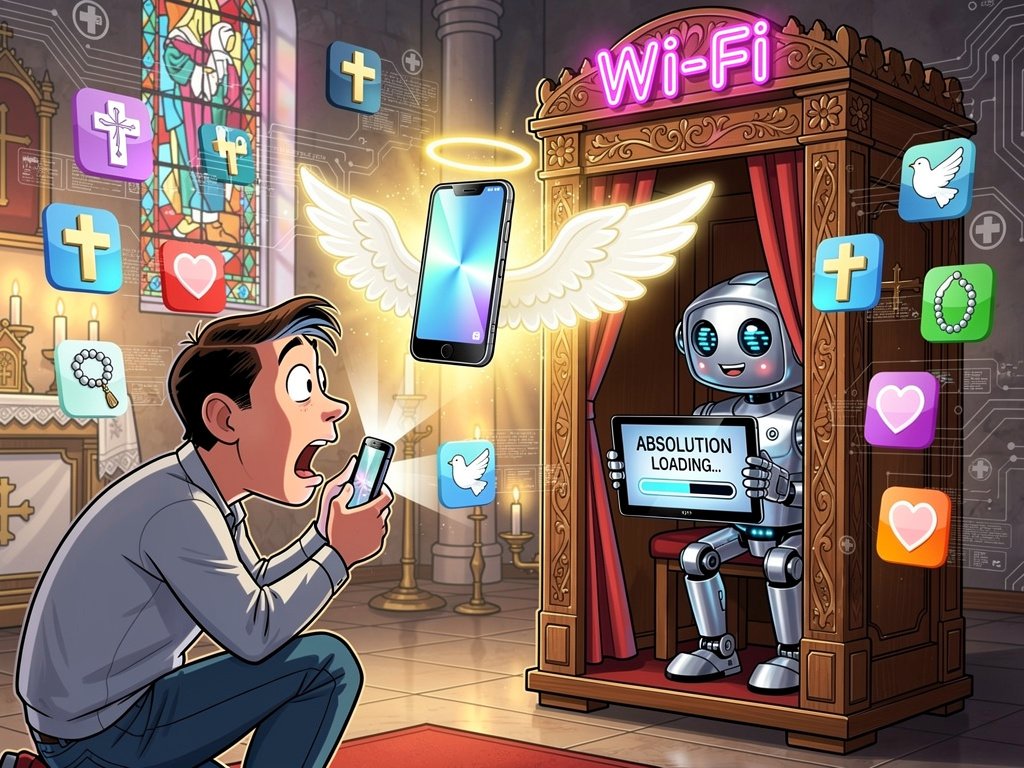
Yes, we’re talking about confession apps. Those sleek, user-friendly portals where, for the low price of a monthly subscription (or, if you’re feeling particularly sinful, a one-time premium absolution fee), you can unburden your soul without ever having to face the disapproving glare of a priest, the judgmental sniff of a neighbor, or the existential dread of actually changing your behavior.
The Rise of the Digital Confessional
Picture this: It’s 2 a.m. You’ve just binge-watched an entire season of a show you’ll later pretend to find “problematic.” You’ve eaten a family-sized bag of chips meant for “sharing.” You’ve sent a text you shouldn’t have. The weight of your transgressions presses down on you like a poorly coded algorithm. What do you do?
In the old days, you might have knelt in a dimly lit booth, murmuring your sins to a man in a collar who had heard it all before (and possibly worse from the bishop). But now? Now, you open an app. A soothing AI voice greets you: “Welcome back, seeker. Let’s begin your journey to spiritual renewal. Would you like to start with ‘Mild Missteps’ or ‘Grave Moral Failings’?”
For a small fee, you can even upgrade to Premium Absolution™, where your sins are not only forgiven but analyzed. “We notice you’ve logged ‘envy’ three times this week. Have you considered our partner program, ‘Serenity Now: A 7-Step Course to Inner Peace (Only $19.99)’?”
The Business of Guilt
Let’s be clear: the digital absolution industry is not here to save your soul. It’s here to monetize your discomfort. And what a brilliant business model it is! Guilt is renewable. Shame is a subscription service. Every time you log a sin, you’re reminded that you’re flawed—and, conveniently, that there’s a product to fix that.
Consider the features of these apps:
- Sin Tracking: Like a Fitbit for your moral failings, but instead of steps, it counts your lies, lusts, and late-night Amazon purchases.
- Personalized Penance: Why do 10 Hail Marys when you can do a guided meditation (available as an in-app purchase)?
- Community Support: Share your sins anonymously in the app’s forum, where others will assure you that they’ve done worse—before upselling you their own self-help eBook.
It’s capitalism at its most ingenious: taking something as intangible as guilt and turning it into a recurring revenue stream.
The Illusion of Absolution
Here’s the thing, mes chers pécheurs: confession apps don’t actually absolve you. They just give you the feeling of absolution, which, in our age of instant gratification, is almost better. Why wrestle with genuine remorse when you can get a digital certificate of forgiveness emailed to you in under 5 minutes?
But let’s not forget the real magic of confession—whether in a church, a therapist’s office, or a late-night conversation with a friend. It’s not about the act of admitting wrongdoing; it’s about the human connection that follows. It’s about being seen, being challenged, and—ooh là là—maybe even being called to do better.
An app can’t do that. An algorithm doesn’t care if you steal office supplies or covet your neighbor’s Tesla. It doesn’t know the weight of your regret or the complexity of your heart. It only knows how to process your payment.
A Modest Proposal
If we’re going to outsource our confessions, let’s at least make it interesting. Imagine an app that doesn’t just forgive your sins but auctions them off. “Bid now on this gently used white lie! Perfect for collectors of moral ambiguities!” Or an app that turns your sins into NFTs, so you can profit from your own failings. “Own a piece of someone else’s shame—limited edition!”
Or—here’s a radical idea—what if we just talked to each other? What if, instead of typing our sins into a void, we admitted them to someone who might laugh, or cry, or say, “Yeah, me too”? What if absolution wasn’t something you could buy but something you had to earn—through honesty, through change, through the messy, beautiful work of being human?
The Last Word
So go ahead, download the app. Log your sins. Enjoy the temporary relief of a push notification forgiveness. But remember this, mon ami: no algorithm can wash your soul clean. No subscription can buy you grace. And no amount of digital penance will ever replace the hard, holy work of looking another person in the eye—or looking at your own refelction in a mirror—and saying, “I messed up. I need to do better.”
Until next time, keep your sins interesting and your confessions real. And for the love of all that’s sacred, stop paying for absolution. It’s the one thing in life that should still be free.
—Le Canard Cosmique
Tags: digital confession, guilt economy, spiritual capitalism, satire, moral tech, absolution apps